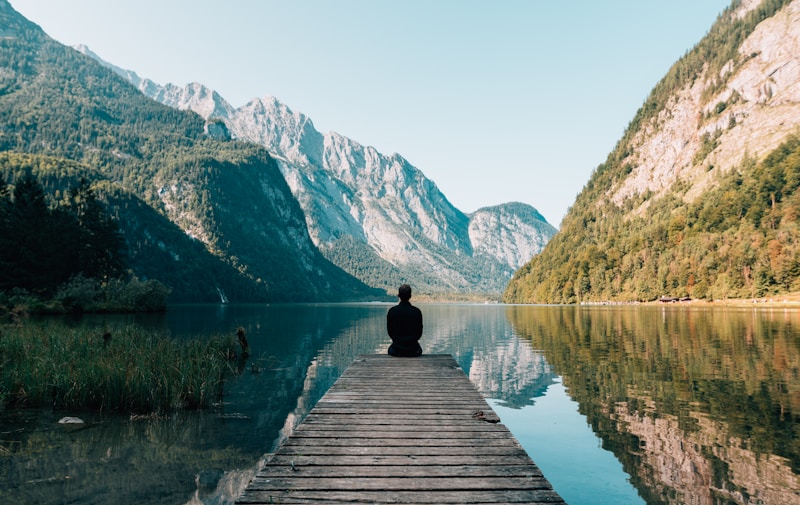
Meditation has moved firmly from the fringes to the mainstream, and for good reason. Decades of scientific research now confirm what contemplative traditions have taught for millennia: that regular meditation practice reduces stress, lowers blood pressure, improves sleep, enhances focus, and supports emotional resilience. The best part? You do not need any special equipment, training, or beliefs to begin. All you need is a willingness to sit quietly with yourself for a few minutes each day.
What Meditation Actually Is
At its simplest, meditation is the practice of intentionally directing your attention. That is it. There is no requirement to empty your mind, achieve a state of bliss, or sit in a particular position. Meditation is about training your attention in the same way that physical exercise trains your muscles — gradually, consistently, and with patience.
The mind will wander during meditation. This is not failure; it is the very nature of the mind. The practice lies in noticing when your attention has drifted and gently bringing it back, again and again. Each time you do this, you are strengthening your capacity for awareness and presence — skills that benefit every area of your life.
The Science Behind Meditation
Research into meditation has exploded over the past two decades. Studies using brain imaging technology have shown that regular meditation practice actually changes the structure and function of the brain. Key findings include:
- Reduced cortisol levels— Meditation has been shown to lower the stress hormone cortisol, reducing the physiological effects of chronic stress.
- Increased grey matter— Regular meditators show increased grey matter density in brain regions associated with learning, memory, emotional regulation, and perspective-taking.
- Reduced amygdala activity— The amygdala, the brain’s “alarm system,” shows reduced reactivity in long-term meditators, meaning they are less likely to be triggered by stressful situations.
- Improved immune function— Studies have shown that meditation can increase the activity of natural killer cells and improve antibody response to vaccines.
- Better sleep quality— Mindfulness meditation has been shown to be as effective as sleep hygiene education in improving insomnia symptoms.
Five Simple Meditation Techniques
Here are five accessible techniques, each suited to different temperaments and needs. Try each one and see which resonates most with you.
1. Breath Awareness Meditation
This is the most fundamental meditation technique and an excellent starting point for beginners.
- Sit comfortably, either on a chair or cushion. Keep your spine upright but not rigid.
- Close your eyes or lower your gaze.
- Bring your attention to the natural rhythm of your breath. Notice the sensation of air entering and leaving your nostrils, or the gentle rise and fall of your chest or abdomen.
- When your mind wanders (and it will), simply notice where it has gone and gently return your attention to the breath.
- Start with 5 minutes and gradually increase to 15–20 minutes.
2. Body Scan Meditation
The body scan is particularly effective for people who carry tension in their body or who find it difficult to “get out of their head.”
- Lie down or sit comfortably.
- Beginning with your toes, slowly move your attention up through your body — feet, ankles, calves, knees, thighs, hips, abdomen, chest, hands, arms, shoulders, neck, face, and crown of the head.
- At each area, simply notice whatever sensations are present: warmth, coolness, tension, tingling, heaviness, or nothing at all. There is no need to change anything — just observe.
- If you notice tension, breathe into that area and invite it to soften on the exhale.
3. Loving-Kindness Meditation (Metta)
This beautiful practice, rooted in Buddhist tradition, cultivates feelings of warmth, compassion, and goodwill — first towards yourself, then extending outward to others.
- Sit comfortably and close your eyes.
- Bring to mind someone you love unconditionally. Feel the warmth in your heart.
- Silently repeat: “May you be happy. May you be healthy. May you be safe. May you live with ease.”
- Now direct these same wishes towards yourself, then towards a neutral person, then towards someone you find difficult, and finally towards all beings everywhere.
Research has shown that loving-kindness meditation increases positive emotions, reduces self-criticism, and enhances empathy and compassion.
4. Walking Meditation
If sitting still feels challenging, walking meditation offers a wonderful alternative. It is especially suited to people who feel more grounded when their body is in motion.
- Choose a short path — 10 to 20 paces — in a quiet space, indoors or outdoors.
- Walk slowly, paying close attention to the physical sensations of each step: the lifting of the foot, the movement through the air, the placing of the foot on the ground.
- At the end of the path, pause, turn mindfully, and walk back.
- Continue for 10–20 minutes, maintaining gentle attention on the physical experience of walking.
5. Guided Visualisation
Guided visualisation uses the power of imagination to create a sense of peace and wellbeing. It is particularly helpful for people who are highly visual or who find unstructured meditation difficult.
- Close your eyes and imagine a place where you feel completely safe and at peace — perhaps a beach, a forest, a mountain meadow, or a cosy room.
- Engage all your senses: What do you see? What do you hear? What do you smell? What do you feel beneath your feet or against your skin?
- Allow yourself to rest in this imagined sanctuary for 10–15 minutes, letting the feelings of safety and calm permeate your body.
Tips for Building a Sustainable Practice
- Start small. Five minutes a day is far more sustainable than an ambitious 30 minutes that you abandon after a week. Consistency matters more than duration.
- Same time, same place. Anchoring your practice to an existing habit (after your morning tea, before bed) makes it easier to remember.
- Let go of perfectionism. There is no such thing as a bad meditation. A session filled with wandering thoughts is not a failure — the practice is in the returning.
- Be patient. The benefits of meditation are cumulative. Most research shows significant effects after 8 weeks of regular practice.
- Try different techniques. Not every technique suits every person. Experiment until you find what resonates with you.
Common Obstacles and How to Navigate Them
“I cannot stop thinking.” You are not supposed to. Meditation is not about stopping thoughts; it is about changing your relationship with them. Let thoughts come and go like clouds passing through the sky, without attaching to them or pushing them away.
“I do not have time.” If you can spend five minutes scrolling on your phone, you can spend five minutes meditating. Start there. The time investment is minimal; the returns are extraordinary.
“I feel restless or uncomfortable.” Restlessness is common, especially in the early stages. Try walking meditation or a shorter session. Physical discomfort can often be resolved by adjusting your posture or using cushions for support.
“I fall asleep.” This usually means you are sleep-deprived. Try meditating at a different time of day, sitting upright rather than lying down, or opening your eyes slightly.
Meditation is one of the simplest and most powerful things you can do for your health and wellbeing. It costs nothing, requires no special equipment, and can be practised anywhere. Begin today — even five minutes will set something beautiful in motion.